
Book Summary 📜
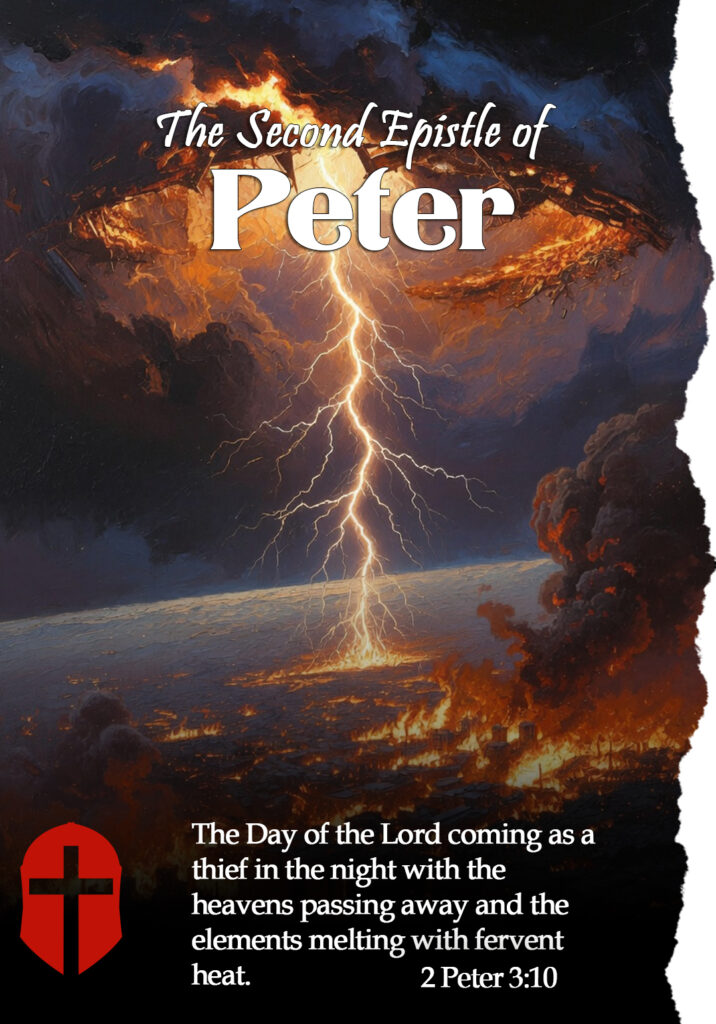
The Apostle Peter writes his second letter to warn and strengthen believers against false teachers and growing skepticism in the last days. He reminds them of the certainty of God’s promises, the power of the Scriptures, and the importance of growing in godly character so they will not fall. Peter powerfully affirms the reliability of the eyewitness testimony of Christ’s glory and the prophetic word, while exposing the destructive ways of false prophets who twist Scripture for personal gain.
He urges believers to live holy and godly lives in light of the coming day of the Lord, when the heavens and earth will be dissolved and a new creation established. This short epistle is a passionate call to diligence, vigilance, and steadfastness until Christ returns.
2 Peter Chapter 1
1 Peter, an apostle of Jesus Christ, to the strangers scattered throughout Pontus, Galatia, Cappadocia, Asia, and Bithynia,
2 Elect according to the foreknowledge of God the Father, through sanctification of the Spirit, unto obedience and sprinkling of the blood of Jesus Christ: Grace unto you, and peace, be multiplied.
3 Blessed be the God and Father of our Lord Jesus Christ, which according to his abundant mercy hath begotten us again unto a lively hope by the resurrection of Jesus Christ from the dead,
4 To an inheritance incorruptible, and undefiled, and that fadeth not away, reserved in heaven for you,
5 Who are kept by the power of God through faith unto salvation ready to be revealed in the last time.
6 Wherein ye greatly rejoice, though now for a season, if need be, ye are in heaviness through manifold temptations:
7 That the trial of your faith, being much more precious than of gold that perisheth, though it be tried with fire, might be found unto praise and honour and glory at the appearing of Jesus Christ:
8 Whom having not seen, ye love; in whom, though now ye see him not, yet believing, ye rejoice with joy unspeakable and full of glory:
9 Receiving the end of your faith, even the salvation of your souls.
10 Of which salvation the prophets have enquired and searched diligently, who prophesied of the grace that should come unto you:
11 Searching what, or what manner of time the Spirit of Christ which was in them did signify, when it testified beforehand the sufferings of Christ, and the glory that should follow.
12 Unto whom it was revealed, that not unto themselves, but unto us they did minister the things, which are now reported unto you by them that have preached the gospel unto you with the Holy Ghost sent down from heaven; which things the angels desire to look into.
13 Wherefore gird up the loins of your mind, be sober, and hope to the end for the grace that is to be brought unto you at the revelation of Jesus Christ;
14 As obedient children, not fashioning yourselves according to the former lusts in your ignorance:
15 But as he which hath called you is holy, so be ye holy in all manner of conversation;
16 Because it is written, Be ye holy; for I am holy.
17 And if ye call on the Father, who without respect of persons judgeth according to every man’s work, pass the time of your sojourning here in fear:
18 Forasmuch as ye know that ye were not redeemed with corruptible things, as silver and gold, from your vain conversation received by tradition from your fathers;
19 But with the precious blood of Christ, as of a lamb without blemish and without spot:
20 Who verily was foreordained before the foundation of the world, but was manifest in these last times for you,
21 Who by him do believe in God, that raised him up from the dead, and gave him glory; that your faith and hope might be in God.
22 Seeing ye have purified your souls in obeying the truth through the Spirit unto unfeigned love of the brethren, see that ye love one another with a pure heart fervently:
23 Being born again, not of corruptible seed, but of incorruptible, by the word of God, which liveth and abideth for ever.
24 For all flesh is as grass, and all the glory of man as the flower of grass. The grass withereth, and the flower thereof falleth away:
25 But the word of the Lord endureth for ever. And this is the word which by the gospel is preached unto you.
This chapter grounds suffering believers in their identity as God’s elect, born again to a living hope and an imperishable inheritance, while calling them to holiness, fervent love, and steadfast faith anchored in the eternal word of the gospel. It beautifully balances doctrine with practical exhortation for exiles living for Christ in a hostile world.
2 Peter Chapter 2
1 My brethren, have not the faith of our Lord Jesus Christ, the Lord of glory, with respect of persons.
2 For if there come unto your assembly a man with a gold ring, in goodly apparel, and there come in also a poor man in vile raiment;
3 And ye have respect to him that weareth the gay clothing, and say unto him, Sit thou here in a good place; and say to the poor, Stand thou there, or sit here under my footstool:
4 Are ye not then partial in yourselves, and are become judges of evil thoughts?
5 Hearken, my beloved brethren, Hath not God chosen the poor of this world rich in faith, and heirs of the kingdom which he hath promised to them that love him?
6 But ye have despised the poor. Do not rich men oppress you, and draw you before the judgment seats?
7 Do not they blaspheme that worthy name by the which ye are called?
8 If ye fulfil the royal law according to the scripture, Thou shalt love thy neighbour as thyself, ye do well:
9 But if ye have respect to persons, ye commit sin, and are convinced of the law as transgressors.
10 For whosoever shall keep the whole law, and yet offend in one point, he is guilty of all.
11 For he that said, Do not commit adultery, said also, Do not kill. Now if thou commit no adultery, yet if thou kill, thou art become a transgressor of the law.
12 So speak ye, and so do, as they that shall be judged by the law of liberty.
13 For he shall have judgment without mercy, that hath shewed no mercy; and mercy rejoiceth against judgment.
14 What doth it profit, my brethren, though a man say he hath faith, and have not works? can faith save him?
15 If a brother or sister be naked, and destitute of daily food,
16 And one of you say unto them, Depart in peace, be ye warmed and filled; notwithstanding ye give them not those things which are needful to the body; what doth it profit?
17 Even so faith, if it hath not works, is dead, being alone.
18 Yea, a man may say, Thou hast faith, and I have works: shew me thy faith without thy works, and I will shew thee my faith by my works.
19 Thou believest that there is one God; thou doest well: the devils also believe, and tremble.
20 But wilt thou know, O vain man, that faith without works is dead?
21 Was not Abraham our father justified by works, when he had offered Isaac his son upon the altar?
22 Seest thou how faith wrought with his works, and by works was faith made perfect?
23 And the scripture was fulfilled which saith, Abraham believed God, and it was imputed unto him for righteousness: and he was called the Friend of God.
24 Ye see then how that by works a man is justified, and not by faith only.
25 Likewise also was not Rahab the harlot justified by works, when she had received the messengers, and had sent them out another way?
26 For as the body without the spirit is dead, so faith without works is dead.
James Chapter 2 condemns favoritism as a violation of the royal law of love, insisting that true faith must be accompanied by merciful works, as exemplified by Abraham and Rahab. It teaches that partiality leads to judgment without mercy, while genuine, active faith justifies and brings life.
2 Peter Chapter 3
1 Likewise, ye wives, be in subjection to your own husbands; that, if any obey not the word, they also may without the word be won by the conversation of the wives;
2 While they behold your chaste conversation coupled with fear.
3 Whose adorning let it not be that outward adorning of plaiting the hair, and of wearing of gold, or of putting on of apparel;
4 But let it be the hidden man of the heart, in that which is not corruptible, even the ornament of a meek and quiet spirit, which is in the sight of God of great price.
5 For after this manner in the old time the holy women also, who trusted in God, adorned themselves, being in subjection unto their own husbands:
6 Even as Sara obeyed Abraham, calling him lord: whose daughters ye are, as long as ye do well, and are not afraid with any amazement.
7 Likewise, ye husbands, dwell with them according to knowledge, giving honour unto the wife, as unto the weaker vessel, and as being heirs together of the grace of life; that your prayers be not hindered.
8 Finally, be ye all of one mind, having compassion one of another, love as brethren, be pitiful, be courteous:
9 Not rendering evil for evil, or railing for railing: but contrariwise blessing; knowing that ye are thereunto called, that ye should inherit a blessing.
10 For he that will love life, and see good days, let him refrain his tongue from evil, and his lips that they speak no guile:
11 Let him eschew evil, and do good; let him seek peace, and ensue it.
12 For the eyes of the Lord are over the righteous, and his ears are open unto their prayers: but the face of the Lord is against them that do evil.
13 And who is he that will harm you, if ye be followers of that which is good?
14 But and if ye suffer for righteousness’ sake, happy are ye: and be not afraid of their terror, neither be troubled;
15 But sanctify the Lord God in your hearts: and be ready always to give an answer to every man that asketh you a reason of the hope that is in you with meekness and fear:
16 Having a good conscience; that, whereas they speak evil of you, as of evildoers, they may be ashamed that falsely accuse your good conversation in Christ.
17 For it is better, if the will of God be so, that ye suffer for well doing, than for evil doing.
18 For Christ also hath once suffered for sins, the just for the unjust, that he might bring us to God, being put to death in the flesh, but quickened by the Spirit:
19 By which also he went and preached unto the spirits in prison;
20 Which sometime were disobedient, when once the longsuffering of God waited in the days of Noah, while the ark was a preparing, wherein few, that is, eight souls were saved by water.
21 The like figure whereunto even baptism doth also now save us (not the putting away of the filth of the flesh, but the answer of a good conscience toward God,) by the resurrection of Jesus Christ:
22 Who is gone into heaven, and is on the right hand of God; angels and authorities and powers being made subject unto him.
This chapter beautifully balances relational duties in marriage and community with encouragement to suffer well for righteousness, anchored in Christ’s redemptive work and victory.
About the Author: Peter
The Apostle Peter (also known as Simon Peter or Cephas) was one of the most prominent figures in the New Testament and a foundational leader of the early church. Originally a fisherman from Bethsaida in Galilee, he was called by Jesus to leave his nets and become a “fisher of men” (Matthew 4:18-19). Peter quickly became the spokesman for the twelve apostles, confessing Jesus as “the Christ, the Son of the living God” (Matthew 16:16). Though he famously denied the Lord three times during the crucifixion, Jesus graciously restored him after the resurrection, commissioning him to “feed My sheep” (John 21).
Peter was a bold yet imperfect man transformed by the Holy Spirit. He preached the powerful sermon at Pentecost that led to the conversion of about three thousand souls (Acts 2), performed miracles, and became a pillar of the Jerusalem church. Tradition holds that he later ministered in Rome and was martyred by crucifixion (upside down, according to early church accounts) during Nero’s persecution around AD 64-68.
1 Peter was written by this same apostle “an apostle of Jesus Christ” (1 Peter 1:1) from “Babylon” (likely a code for Rome) to encourage suffering believers scattered across Asia Minor. In it, Peter draws from his own experiences of failure, restoration, and steadfast faith to strengthen Christians facing trials, calling them to holy living, patient endurance, and hope in the risen Christ.
This letter carries the heart of a man who walked with Jesus, witnessed His glory on the Mount of Transfiguration, and learned the cost of following the suffering Savior. Peter’s words continue to comfort and challenge every generation of believers living as “strangers and pilgrims” in this world.
All Scripture is from the King James Version (KJV) of the Holy Bible. Chapter summaries © 2026 CiK Republic. Provided as a free study resource.