
Chapter Jump: 1 | 2 | 3 | 4 | 5 | 6 | 7 | 8 | 9 | 10 | 11 | 12 | 13 | 14 | 15 | 16 | 17 | 18 | 19 | 20 | 21 | 22
Revelations Chapter 1
Chapter 1 introduces the Revelation as a divine message from God through Jesus Christ to John, describing a vision of the glorified Christ amid seven golden candlesticks, holding seven stars, and instructing John to write letters to seven churches in Asia.
Revelations Chapter 2
Chapter 2 contains letters from Christ to four churches: Ephesus, Smyrna, Pergamum, and Thyatira, commending their strengths, rebuking weaknesses, and promising rewards to overcomers.
Revelations Chapter 3
Chapter 3 continues the letters to the remaining three churches: Sardis, Philadelphia, and Laodicea, addressing their spiritual states, encouraging faithfulness, and warning of judgment.
Revelations Chapter 4
Chapter 4 marks a transition from the messages to the seven churches to heavenly visions. John sees a door opened in heaven and is invited to ascend, where he beholds God’s throne in glory, surrounded by twenty-four elders, seven lamps representing the Spirit, a crystal sea, four living creatures, and ceaseless worship declaring God’s holiness and worthiness as Creator.
Revelations Chapter 5
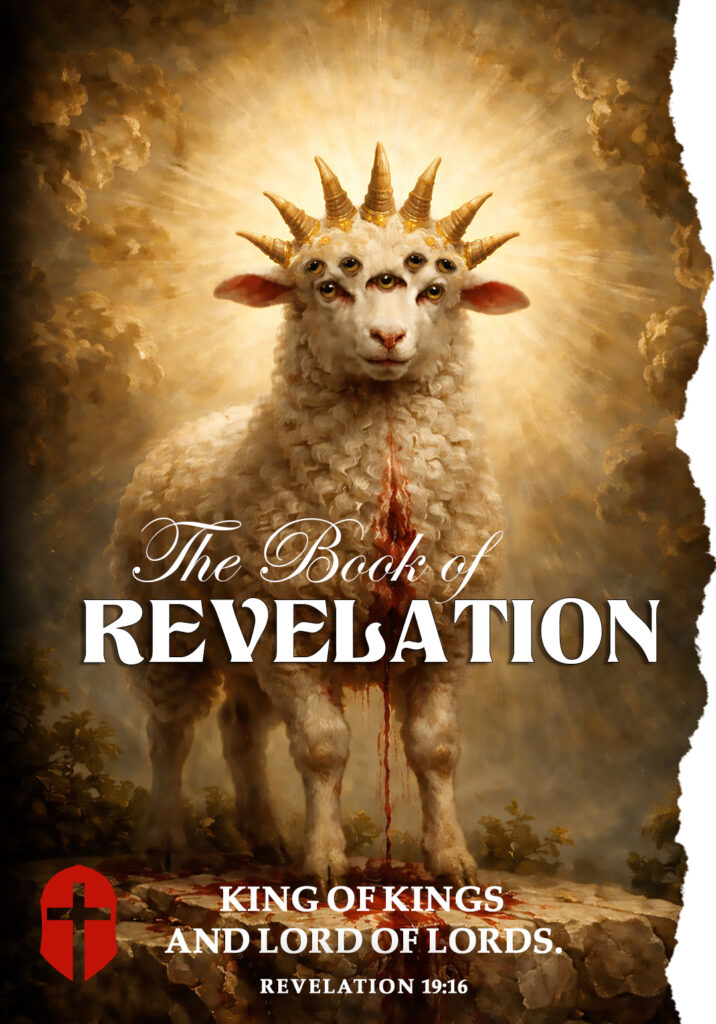
Chapter 5 continues the heavenly throne room vision from chapter 4. John sees a scroll (book) in God’s right hand, sealed with seven seals, and a search for one worthy to open it. No one in creation qualifies, causing John to weep, until an elder points to the Lion of Judah (the Root of David) who has prevailed. This figure appears as a slain Lamb with seven horns and seven eyes, who takes the scroll, prompting universal worship from the living creatures, elders, myriads of angels, and every creature, ascribing worthiness to the Lamb for redemption through His blood.
Revelations Chapter 6
Chapter 6 depicts the Lamb (Christ) opening the first six seals of the scroll from chapter 5, unleashing judgments on earth. The first four seals release the Four Horsemen: white (conquest), red (war), black (famine/economic hardship), and pale (death and Hades). The fifth seal reveals martyred souls under the altar crying for justice and receiving white robes with a call to wait. The sixth seal brings cosmic cataclysm: earthquake, darkened sun and blood moon, falling stars, rolled-up sky, and terrified humanity hiding from the wrath of God and the Lamb.
Revelations Chapter 7
Chapter 7 serves as an interlude between the sixth and seventh seals, providing a pause in the judgments. It describes the sealing of 144,000 servants of God from the tribes of Israel to protect them from coming harms, followed by John’s vision of a vast, innumerable multitude from every nation standing before the throne and the Lamb in white robes, praising God. An elder explains that this multitude has come out of great tribulation, washed their robes in the Lamb’s blood, and now enjoy eternal comfort and God’s presence, with no more suffering.
Revelations Chapter 8
Chapter 8 begins with the Lamb opening the seventh seal, resulting in silence in heaven for about half an hour, followed by the introduction of seven angels with trumpets. An interlude shows an angel offering incense mixed with the prayers of saints on the golden altar, then casting fire from the altar to earth, causing thunder, lightning, voices, and an earthquake. The first four trumpets sound: hail and fire mixed with blood burn a third of earth/trees/grass (first), a burning mountain turns a third of the sea to blood killing a third of sea life and destroying ships (second), a great star (Wormwood) falls poisoning a third of rivers and waters causing many deaths (third), and a third of sun, moon, and stars darkened (fourth), reducing light by a third.
Revelations Chapter 9
Chapter 9 describes the sounding of the fifth and sixth trumpets, introducing the first two “woes.” The fifth trumpet unleashes demonic locust-like creatures from the bottomless pit (Abyss), led by their king Abaddon/Apollyon, who torment unsealed people for five months with scorpion-like stings, causing such agony that men seek death but cannot find it. The sixth trumpet releases four bound angels at the Euphrates, unleashing an army of 200 million horsemen whose fire, smoke, and brimstone kill a third of mankind; yet the survivors refuse to repent of idolatry, murders, sorceries, fornication, and thefts.
Revelations Chapter 10
Chapter 10 is an interlude between the sixth and seventh trumpets, introducing a mighty angel descending from heaven with a little open book (scroll). The angel stands astride sea and land, roars like a lion, and seven thunders speak (their words sealed by divine command). John is commanded to take and eat the little book, which is sweet in mouth but bitter in belly, symbolizing the bittersweet nature of God’s prophetic message. He is then instructed to prophesy again before many peoples, nations, tongues, and kings.
Revelations Chapter 11
Chapter 11 continues the interlude between the sixth and seventh trumpets, featuring John’s command to measure God’s temple (but exclude the outer court given to Gentiles, who trample the holy city for 42 months). It introduces God’s two witnesses who prophesy for 1,260 days in sackcloth, empowered like olive trees and candlesticks, with fire from their mouths to devour enemies. The beast from the bottomless pit kills them, their bodies lie unburied in the great city (Sodom/Egypt spiritually, where Christ was crucified) for 3½ days while the world rejoices. God resurrects them, they ascend to heaven amid an earthquake killing 7,000, prompting survivors to give glory to God. The seventh trumpet sounds, announcing God’s kingdom, with heavenly voices praising God for reigning, the time of judgment, rewarding prophets/saints, and destroying destroyers; the temple opens, revealing the ark amid lightning, thunder, earthquake, and hail.
Revelations Chapter 12
Chapter 12 presents a symbolic vision of cosmic conflict: a woman clothed with the sun, moon under her feet, crowned with twelve stars, gives birth to a male child destined to rule nations with an iron rod; a great red dragon with seven heads, ten horns, and seven crowns attempts to devour the child, who is caught up to God. War erupts in heaven as Michael and his angels fight the dragon (identified as Satan, the old serpent, devil, deceiver), casting him and his angels to earth. The dragon persecutes the woman, who flees to the wilderness for 1,260 days (protected and nourished); the dragon spews a flood to sweep her away, but the earth swallows it. Enraged, the dragon makes war on the woman’s remaining offspring who keep God’s commandments and have the testimony of Jesus.
Revelations Chapter 13
Chapter 13 describes two beasts central to end-time events: the first beast rising from the sea, with seven heads, ten horns, ten crowns, and blasphemous names, resembling a leopard, bear, and lion, receiving a fatal wound that heals, astonishing the world. It blasphemes God, wars against saints, and rules 42 months with authority from the dragon (Satan). All earth dwellers worship it except those in the book of life. The second beast rises from the earth, with two lamb-like horns but speaking like a dragon, exercising the first beast’s authority, performing great signs (fire from heaven), deceiving inhabitants to make an image of the wounded beast, giving it breath to speak, and enforcing the mark of the beast (666) on right hand or forehead as required for buying/selling.
Revelations Chapter 14
Chapter 14 offers a series of visionary scenes providing contrast and assurance amid tribulation judgments: the Lamb with the 144,000 sealed redeemed on Mount Zion singing a unique new song; three angels proclaiming the everlasting gospel, Babylon’s fall, and warning against beast worship with the mark; a voice from heaven blessing those who die in the Lord; the Son of Man on a cloud with a sickle reaping the earth’s harvest; and an angel calling for grape harvest, thrown into God’s winepress of wrath, producing blood flow.
Revelations Chapter 15
Chapter 15 serves as a brief, transitional interlude preparing for the final series of judgments—the seven bowls (or vials) of God’s wrath. John sees a heavenly scene of victory: the redeemed who overcame the beast, its image, mark, and number standing on a sea of glass mingled with fire, holding harps and singing the song of Moses and the Lamb in praise of God’s great and marvelous works, righteous judgments, and universal kingship. Seven angels then emerge from the heavenly temple carrying the seven last plagues (bowls), which will complete God’s wrath. The temple fills with smoke from God’s glory and power, preventing entry until the plagues finish, signaling the solemn, unstoppable execution of final divine judgment.
Revelations Chapter 16
Chapter 16 unleashes the seven bowls (vials) of God’s wrath, the final and most severe series of judgments poured out upon the earth. Each bowl brings catastrophic plagues: painful sores on beast worshipers (first), sea turning to blood killing all marine life (second), rivers and springs to blood (third), scorching sun heat (fourth), darkness on the beast’s kingdom with gnawing pain (fifth), Euphrates dried up allowing kings from the east and demonic spirits gathering for Armageddon (sixth), and a massive earthquake splitting Babylon with huge hailstones (seventh). Amid the judgments, voices from the throne affirm “It is done,” and the chapter emphasizes the completion of divine wrath with no repentance from those afflicted.
Revelations Chapter 17
Chapter 17 introduces the judgment of the great whore (Babylon the Great), depicted as a woman riding a scarlet beast with seven heads and ten horns. She is arrayed in purple and scarlet, adorned with gold, precious stones, and pearls, holding a golden cup full of abominations and the impurities of her fornication. Her forehead bears the name “Mystery, Babylon the Great, the Mother of Harlots and Abominations of the Earth.” She is drunk with the blood of saints and martyrs. An angel explains the mystery: the beast (previously described) was, is not, and will ascend from the Abyss to destruction; the seven heads are seven mountains/kings; the ten horns are ten kings who give power to the beast and war against the Lamb but are defeated. The waters are peoples/nations; the ten horns and beast will hate the whore, strip and devour her. This fulfills God’s purpose to give the kings their kingdom until His words are accomplished.
Revelations Chapter 18
Chapter 18 announces and vividly describes the sudden, total fall of Babylon the Great, the corrupt world system of commerce, luxury, immorality, and persecution of God’s people. A mighty angel proclaims her fall, as she becomes a dwelling for demons and unclean spirits. Kings, merchants, and shipmasters who profited from her mourn her destruction, lamenting the loss of her opulent goods and trade, while heaven rejoices at God’s righteous judgment avenging His servants’ blood. Babylon is judged in one hour with plagues, famine, mourning, and burning, never to rise again—no more music, craftsmen, or light in her.
Revelations Chapter 19
Chapter 19 shifts from judgment to triumphant celebration and consummation. Heaven erupts in a great multitude praising God for judging Babylon the Great and avenging His servants’ blood. The marriage supper of the Lamb is announced, with the bride (the church/saints) made ready in fine linen (righteous acts). John is rebuked for attempting to worship the angel. Christ appears as the faithful and true Rider on a white horse, called Word of God, King of kings and Lord of lords, leading heavenly armies to strike the nations with the sword from His mouth and rule with an iron rod. The beast and false prophet are captured and cast alive into the lake of fire, while their armies are slain by the sword from Christ’s mouth, and birds feast on their flesh.
Revelations Chapter 20
Chapter 20 describes the binding of Satan for a thousand years during Christ’s millennial reign, the resurrection and reign of tribulation martyrs with Christ, Satan’s release and final deception leading to a brief rebellion crushed by fire from heaven, his casting into the lake of fire, the great white throne judgment of all the dead (judged by works from books and the book of life), and the second death (lake of fire) for those not found in the book of life.
Revelations Chapter 21
Chapter 21 unveils the new heaven and new earth, replacing the old creation that passed away, with no more sea (symbolizing chaos/separation). The holy city, New Jerusalem, descends from heaven as a prepared bride adorned for her husband. God dwells directly with humanity, wiping away every tear; death, sorrow, crying, and pain cease forever—”the former things are passed away.” God declares He makes all things new, promising inheritance to the overcomer and warning that the cowardly, unbelieving, abominable, murderers, sexually immoral, sorcerers, idolaters, and liars will inherit the lake of fire (second death). An angel shows John the bride, the Lamb’s wife, as the radiant New Jerusalem descending, described in magnificent detail: immense size (foursquare, 12,000 furlongs each side), high wall with twelve gates (named for Israel’s tribes) guarded by twelve angels, twelve foundations (named for apostles), jeweled walls and foundations, massive pearl gates, pure gold street like transparent glass, no temple (God and Lamb are its temple), no sun/moon (God’s glory and Lamb’s light illuminate it), open gates day and night for nations to bring glory/honor, nothing unclean or abominable enters—only those written in the Lamb’s book of life.
Revelations Chapter 22
Chapter 22 concludes the Book of Revelation with a vivid description of the eternal state in the New Jerusalem: the river of the water of life flowing from God’s and the Lamb’s throne, the tree of life on either side bearing twelve fruits monthly for healing the nations, no more curse, God’s servants seeing His face and reigning forever, with His name on their foreheads and eternal light from God and the Lamb. The angel affirms the words are trustworthy and true, and John is instructed not to seal the prophecy (unlike Daniel) as the time is near. A series of final warnings and blessings emphasize keeping the words, imminent coming of Christ, reward according to works, blessing for those who wash their robes to enter the city and eat the tree of life, exclusion of the unclean, and a closing invitation to take the water of life freely. The book ends with a solemn warning against adding to or subtracting from its words, and a final prayer: “Even so, come, Lord Jesus,” with grace to all.
Overall Summary:
The Book of Revelation, an apocalyptic prophecy given by the risen Christ to the apostle John during his exile on Patmos, unfolds as a divine unveiling of end-time events designed to comfort persecuted believers and proclaim God’s ultimate victory.
It opens with Christ’s messages to seven churches in Asia, exposing their spiritual conditions and calling them to faithfulness amid tribulation, then ascends into heavenly worship scenes around the throne, where the Lamb (Christ) takes the sealed scroll and begins unleashing judgments through seven seals, seven trumpets, and seven bowls, each series intensifying divine wrath on a rebellious earth while protecting the sealed remnant.
Central conflicts feature Satan’s rage through the dragon, the beast (Antichrist), the false prophet, and Babylon the Great (a corrupt world system of idolatry, immorality, and commerce), which persecutes the saints but is ultimately exposed, betrayed by its allies, and destroyed in catastrophic judgment.
The book reaches its climax with Christ’s triumphant second coming as King of kings on a white horse, defeating the beast and false prophet (cast into the lake of fire), binding Satan for a thousand year millennial reign with resurrected martyrs, and finally judging all humanity at the great white throne, where the unsaved face the second death.
The eternal state dawns with a new heaven and new earth, the radiant New Jerusalem descending as God’s dwelling place with redeemed humanity, where the curse is lifted, the tree and river of life sustain the nations, God wipes away every tear, and His people see His face and reign forever in perfect light and communion.
Revelation closes with urgent warnings to keep its words, a final invitation to the water of life, solemn curses on those who alter the prophecy, and the longing cry, “Even so, come, Lord Jesus,” sealing its message of hope, judgment, and consummation for the faithful.