
Chapter Jump: 1 | 2 | 3 | 4 | 5 | 6
1 Timothy Chapter 1
Paul opens this pastoral letter by identifying himself as an apostle commissioned by God and Christ, addressing Timothy as his true spiritual son in the faith with a greeting of grace, mercy, and peace. He reminds Timothy of the charge given to him in Ephesus to confront false teachers who promote myths, endless genealogies, and speculative doctrines that distract from genuine faith and love; Paul contrasts this with the proper use of the law (which exposes sin rather than saving the righteous), shares his dramatic personal testimony of transformation from blasphemer and persecutor to recipient of abundant grace, and concludes by committing the spiritual battle to Timothy while warning against those who have shipwrecked their faith.
1 Timothy Chapter 2
Paul urges that prayers, supplications, intercessions, and thanksgivings be offered for all people, including kings and those in authority, so that Christians may live peaceful, godly lives; he affirms God’s desire for universal salvation through the one mediator, Christ Jesus, who ransomed all humanity. The chapter then provides instructions for public worship: men are to pray with holy hands free of anger or doubt, while women are to dress modestly and focus on good works, learning in quiet submission without teaching or exercising authority over men, grounded in the creation order of Adam and Eve and the consequences of the fall, yet with the promise of salvation through faithful living.
1 Timothy Chapter 3
Paul outlines the high moral and spiritual qualifications for church leaders—bishops (overseers) must be blameless, faithful in marriage, self-controlled, hospitable, able to teach, and skilled at managing their own households—while deacons must be dignified, truthful, temperate, and proven in character, with their wives also meeting strict standards of conduct. These requirements ensure leaders are above reproach both inside and outside the church; Paul concludes by explaining the purpose of these instructions (so Timothy knows how to conduct himself in God’s household, the church) and extols the profound mystery of godliness revealed in Christ’s incarnation, vindication, and exaltation.
1 Timothy Chapter 4
Paul warns that in the latter times some will depart from the faith by heeding deceiving spirits and demonic doctrines, such as forbidding marriage and certain foods—practices that contradict God’s good creation, which is to be received with thanksgiving and sanctified by His word and prayer. He instructs Timothy to counter this by being a faithful minister nourished in sound doctrine, rejecting myths in favor of godliness (which benefits both present and eternal life), modeling maturity despite his youth through exemplary conduct, diligent public reading and teaching, and personal devotion to his spiritual gift, so that both he and his hearers will be saved.
1 Timothy Chapter 5
Paul gives practical instructions for honoring various groups in the church: treat older men as fathers, younger men as brothers, older women as mothers, and younger women as sisters with purity; he details the church’s responsibility to support genuine widows (those over sixty, of proven character, and without family support) while requiring families to care for their own to avoid burdening the church. Additional guidelines cover honoring faithful elders (especially those who preach and teach), protecting elders from unfounded accusations, rebuking sin publicly, exercising impartiality in leadership appointments, and maintaining personal purity, with a final note on how sins and good works eventually become evident.
1 Timothy Chapter 6
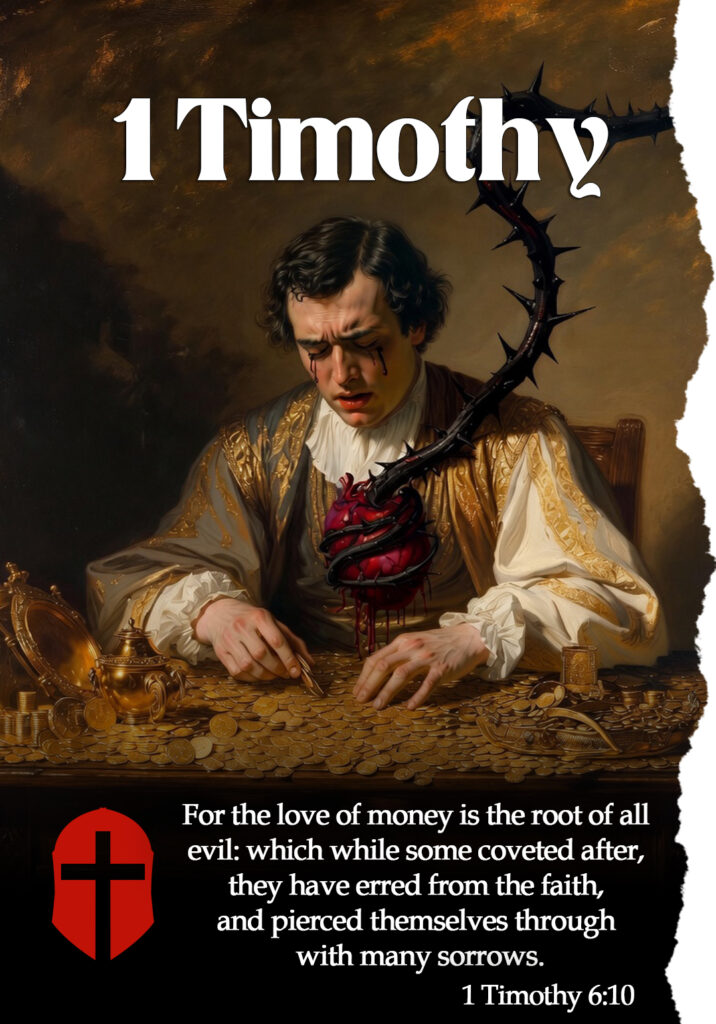
Paul addresses slaves’ proper attitude toward masters (honoring them to avoid blaspheming God’s name), warns against false teachers who equate godliness with financial gain, and declares that godliness with contentment is true riches while the love of money leads to ruin. He exhorts Timothy as a man of God to pursue righteousness and fight the good fight of faith, keep the commandment blamelessly until Christ’s appearing, and charge the rich to be generous rather than arrogant; the letter closes with a final charge to guard the entrusted deposit of truth against profane controversies, noting that some have already strayed from the faith.
1 Timothy: Overall Summary
The First Epistle to Timothy is a pastoral letter from the Apostle Paul to his young protégé Timothy, offering guidance on how to lead and order the church in Ephesus amid false teaching and emerging challenges. Paul begins by charging Timothy to confront teachers who promote myths, genealogies, and speculative doctrines that distract from the gospel, emphasizing instead love from a pure heart, a good conscience, and sincere faith, while using his own dramatic conversion as proof of God’s abundant mercy toward sinners.
Chapter 2 calls the church to prioritize prayer for all people, especially leaders, and establishes guidelines for orderly worship that reflect creation order, modesty, and submission. In chapter 3, Paul sets high moral and character qualifications for bishops (overseers) and deacons, stressing that church leaders must manage their households well and maintain a strong testimony before outsiders, as the church is “the pillar and ground of the truth” upholding the mystery of godliness in Christ.
Chapter 4 warns of latter day departures from the faith through legalistic asceticism and urges Timothy to combat this by being an example of godliness, diligent in Scripture, teaching, and the exercise of his spiritual gift. Chapter 5 provides practical instructions for honoring widows, elders, and all age groups within the church family while maintaining purity, justice, and financial responsibility.
Finally, chapter 6 contrasts the dangers of the love of money with the true riches of contentment and godliness, charging Timothy to fight the good fight of faith, guard the apostolic deposit of sound doctrine, and call the wealthy to generosity as they await Christ’s appearing.