
Chapter Jump: 1 | 2 | 3 | 4 | 5 | 6
Ephesians Chapter 1
Ephesians chapter 1 opens with Paul’s greeting and launches into a profound doxology of praise for the spiritual blessings believers have in Christ. It explores core doctrines of election (chosen before the foundation of the world to be holy), adoption as sons, redemption through Christ’s blood, and the revelation of God’s mysterious will to unite all things in Christ. Paul emphasizes God’s sovereign grace, predestination according to His good pleasure, and the Holy Spirit as the seal and earnest of our inheritance. The chapter then shifts to Paul’s prayer for the Ephesian believers, asking that God would grant them the spirit of wisdom and revelation so their eyes of understanding are enlightened to grasp the hope of their calling, the riches of their inheritance, and the immeasurable power available to those who believe—the same power that raised Christ from the dead and seated Him far above every ruler and authority as Head over the church, His body. This sets the theological foundation for the entire letter, showing that every blessing flows from God’s eternal plan in Christ.
Ephesians Chapter 2
Ephesians chapter 2 delivers one of the clearest pictures of the gospel in the New Testament by contrasting humanity’s desperate condition with God’s gracious rescue. It describes how all people—Jew and Gentile alike—were once dead in trespasses and sins, enslaved to the world, the devil, and fleshly desires, and therefore children of wrath. Yet God, rich in mercy and motivated by great love, made us alive together with Christ, raised us up with Him, and seated us in heavenly places—all by grace through faith, not works, so no one can boast. The chapter then highlights the radical reconciliation accomplished by Christ’s cross: the “middle wall of partition” between Jew and Gentile is broken down, creating one new man in Christ and granting both groups equal access to the Father by one Spirit. Finally, it portrays the church as God’s new temple, built on the foundation of apostles and prophets with Christ as cornerstone, growing into a holy dwelling place for God. This chapter powerfully underscores salvation by grace alone and the resulting unity of the body of Christ.
Ephesians Chapter 3
In Ephesians chapter 3 Paul explains his apostolic ministry and the astonishing “mystery” God revealed to him: that Gentiles are fellow heirs with Jews, members of the same body, and partakers of God’s promise in Christ through the gospel. He humbly describes himself as the least of all saints yet entrusted with the unsearchable riches of Christ to make this mystery known. The chapter culminates in Paul’s second great prayer, this time bowing his knees before the Father so that believers would be strengthened by the Spirit in the inner man, that Christ would dwell in their hearts by faith, and that they would comprehend the limitless dimensions of Christ’s love—ultimately being filled with all the fullness of God. It closes with a soaring doxology praising the God who can do “exceeding abundantly above all that we ask or think” according to His power at work in us. Theologically, this chapter magnifies the church as the display of God’s manifold wisdom even to heavenly powers.
Ephesians Chapter 4
Ephesians chapter 4 marks the shift from doctrine to duty, urging believers to “walk worthy” of their high calling. Paul stresses unity in the body of Christ, one body, one Spirit, one hope, one Lord, one faith, one baptism, one God and Father, while also celebrating diversity through the gifts Christ gave (apostles, prophets, evangelists, pastors, teachers) for the equipping of the saints and the building up of the church until all reach maturity in Christ. He contrasts the old Gentile way of life (vanity of mind, darkened understanding, moral corruption) with the new life in Christ, calling believers to put off the old man, be renewed in the spirit of their mind, and put on the new man created in righteousness and true holiness. Practical instructions follow: speak truth, control anger, work honestly, guard speech, forgive, and avoid grieving the Holy Spirit. The chapter paints a vivid picture of the church growing into the fullness of Christ through truth spoken in love.
Ephesians Chapter 5
Ephesians chapter 5 continues the practical outworking of the gospel by commanding believers to imitate God as dear children and to walk in love as Christ loved us and gave Himself for us. It issues strong warnings against sexual immorality, impurity, greed, and foolish talk, behaviors that have no place among saints and invite God’s wrath. Believers are to live as children of light, exposing the works of darkness rather than participating in them. The chapter urges wise living: making the most of time in evil days, understanding God’s will, being filled with the Spirit instead of wine, and worshiping through psalms, hymns, and spiritual songs while giving thanks always. The second half introduces the household code, beginning with mutual submission out of reverence for Christ, then detailing the beautiful picture of marriage as a reflection of Christ’s sacrificial love for the church and the church’s respectful response. This chapter paints Christian conduct as radiant, Spirit empowered, and patterned after Christ’s relationship with His bride.
Ephesians Chapter 6
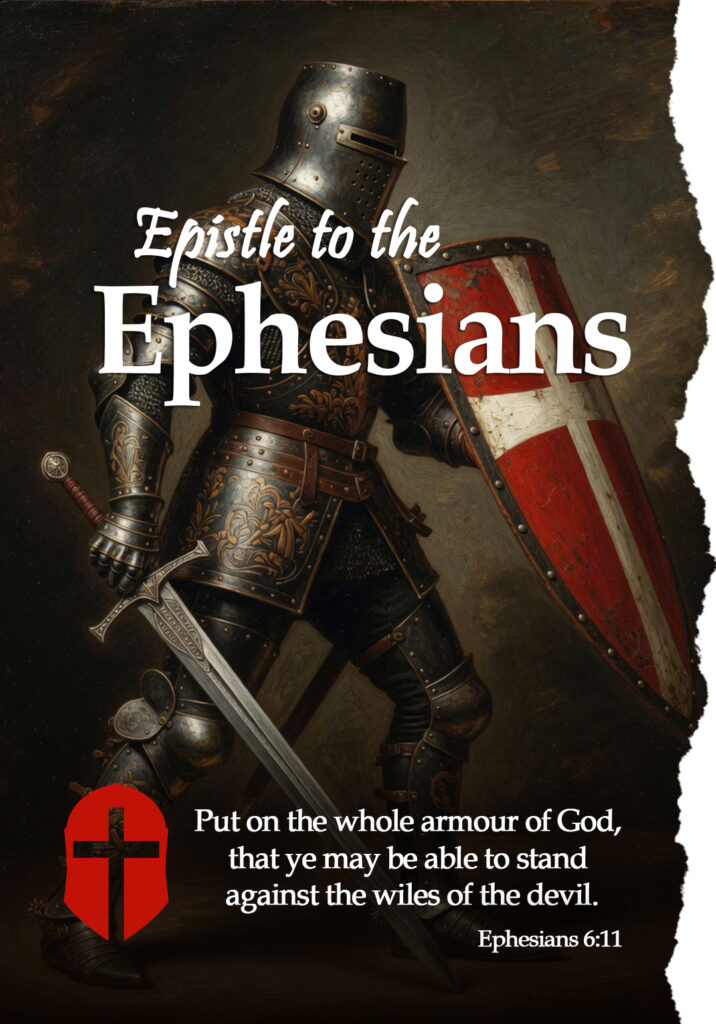
Ephesians chapter 6 completes the household code with instructions for children to obey parents and fathers to nurture their children in the Lord, then for servants and masters to relate to one another with integrity, knowing they both serve the same heavenly Master. The climax of the letter is Paul’s call to “be strong in the Lord and in the power of his might” by putting on the whole armor of God. He reminds believers that the real battle is not against flesh and blood but against spiritual forces of evil, and he equips them with truth, righteousness, the gospel of peace, faith, salvation, the word of God, and persevering prayer. Paul concludes with a personal note about his own circumstances and a final benediction of peace, love, faith, and grace. This chapter arms the church for spiritual warfare while grounding everyday relationships in the fear of the Lord.
Ephesians: Summary
The book of Ephesians, written by the apostle Paul while imprisoned, stands as one of the richest theological and practical letters in the New Testament. Its first three chapters unfold the breathtaking doctrines of God’s eternal purpose in Christ: spiritual blessings, salvation by grace alone, the mystery of the church as the unified body of Jew and Gentile, and the immeasurable power and love available to believers. The final three chapters translate that lofty theology into everyday conduct, calling the church to unity, maturity, holy living, Spirit-filled relationships, and victorious spiritual warfare. Throughout, Paul portrays the church not merely as an organization but as Christ’s own body, His holy temple, His beloved bride, and His army equipped for battle. The letter exalts the supremacy of Christ, the sovereignty of God’s grace, and the transforming power of the gospel that changes both identity and behavior. Ephesians remains a timeless manual for understanding who we are in Christ and how we are to live as His people in a dark world.