
Colossians Chapter 1
In Colossians Chapter 1, Paul (writing from prison with Timothy) greets the church at Colosse and gives thanks for their faith in Christ Jesus, their love for all the saints, and their hope stored in heaven fruit produced by the gospel that Epaphras faithfully deli vered to them. He then prays continually that they would be filled with the knowledge of God’s will, walk worthy of the Lord, bear fruit in good works, and be strengthened with all power for endurance and patience. The chapter reaches its theological pinnacle in verses 15–20, a majestic hymn declaring Christ’s absolute supremacy: He is the image of the invisible God, the firstborn over all creation, the Creator and Sustainer of all things visible and invisible, the Head of the church, the firstborn from the dead, and the one in whom all the fullness of God dwells. Through His blood on the cross He has reconciled all things to God, making peace. Paul then describes his own joyful suffering and labor as a minister of the gospel, revealing the formerly hidden mystery that Christ now dwells in Gentile believers as “the hope of glory.” This chapter firmly counters any emerging heresies in Colosse (proto Gnostic or legalistic mixtures) by exalting Christ’s unchallenged preeminence and the complete sufficiency of the gospel.
Colossians Chapter 2
Paul continues his letter by expressing his intense spiritual struggle and concern for the Colossians and the nearby church in Laodicea, desiring that their hearts would be comforted and knit together in love so they might grasp the full riches of understanding the mystery of God, Christ Himself, in whom all treasures of wisdom and knowledge are hidden. He issues a strong warning against being deceived by enticing words, human philosophy, vain deceit, traditions of men, and the rudiments of the world, reminding them that they are complete in Christ, who is the head of all principality and power. The chapter dismantles legalistic and mystical errors (circumcision, dietary laws, holy days, angel worship, and ascetic rules) by showing that believers have been spiritually circumcised, buried and raised with Christ, forgiven, and set free because Christ has triumphed over every power and authority, nailing the handwriting of ordinances to His cross. The practical call is to live rooted and built up in Christ, abounding in thanksgiving, and to reject anything that would rob them of their reward or pull them back under worldly regulations.
Colossians Chapter 3
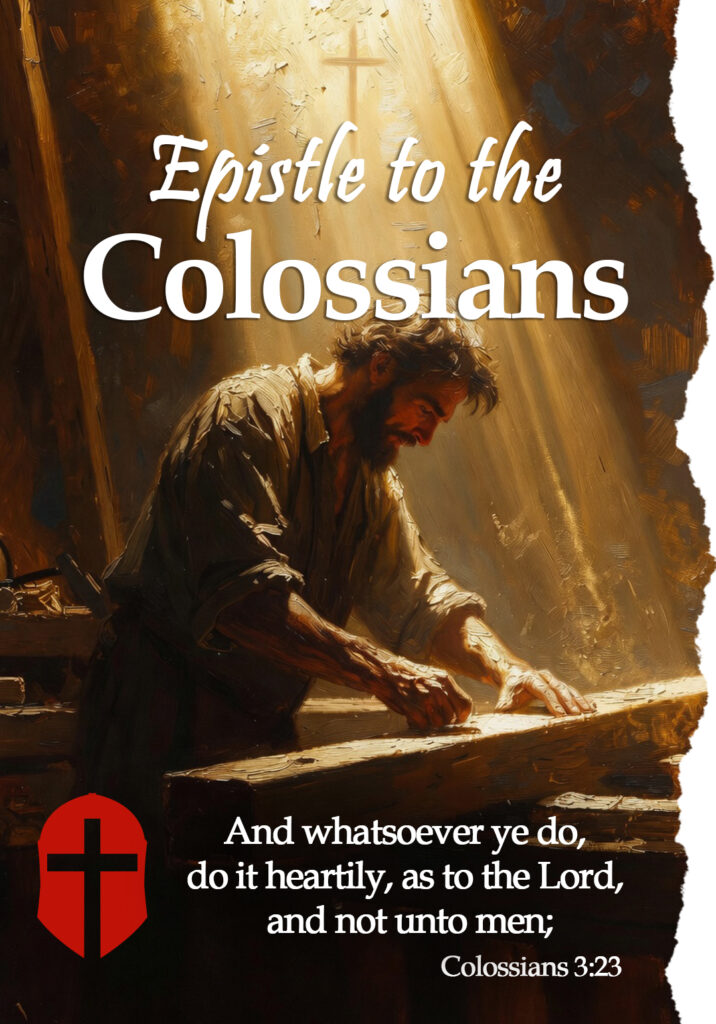
Having established the believer’s union with the risen Christ, Paul now calls the Colossians to live out that reality practically: set their minds on things above where Christ is seated, put to death the old earthly nature (fornication, uncleanness, evil desires, covetousness, anger, malice, etc.), and “put on” the new man renewed in the image of the Creator. In this new humanity there is no longer Greek or Jew, slave or free; Christ is all and in all. The chapter overflows with positive virtues to clothe oneself in compassion, kindness, humility, meekness, longsuffering, forgiveness, and above all love, which binds everything in perfect unity. It closes with the famous “household codes” that show how the gospel transforms everyday relationships: wives submit, husbands love, children obey, fathers nurture, servants work heartily as unto the Lord, and (in the next chapter) masters treat servants justly. Everything is to be done “in the name of the Lord Jesus,” with thankfulness and the word of Christ dwelling richly.
Colossians Chapter 4
Paul finishes the household instructions by charging masters to give servants what is just and fair, remembering they too have a Master in heaven. The focus then shifts to persevering prayer (with watchfulness and thanksgiving), especially intercession for Paul’s ministry that the mystery of Christ might be proclaimed clearly even while he is in bonds. He urges wise and gracious conduct toward outsiders, making the most of every opportunity, and speech that is always seasoned with salt. The remainder of the chapter consists of warm personal greetings and instructions: Tychicus and Onesimus will deliver news, fellow workers Aristarchus, Mark, Justus, Epaphras (who prays fervently for them), Luke, and Demas send greetings. Paul asks that the letter be read publicly and exchanged with the Laodicean church, and he gives a final charge to Archippus to fulfill his ministry. The closing signature and plea, “Remember my bonds. Grace be with you. Amen.”, underscore the authenticity and pastoral heart of the imprisoned apostle. This chapter shows doctrine flowing into daily prayer, evangelism, and loving community life.
Colossians: Summary
The Epistle to the Colossians, written by the Apostle Paul from prison along with Timothy, is a powerful defense of the absolute supremacy and sufficiency of Jesus Christ against early heresies that mixed philosophy, legalism, mysticism, and angel worship.
In Chapter 1, Paul gives thanks for the Colossians’ faith, love, and hope, prays for their spiritual growth, and presents one of the New Testament’s highest Christological passages, declaring Christ as the image of the invisible God, Creator and Sustainer of all things, Head of the church, and the One through whose blood all things are reconciled to God, revealing the mystery of “Christ in you, the hope of glory.”
Chapter 2 warns the believers not to be spoiled by human philosophy, traditions of men, or worldly rudiments, emphasizing that they are complete in Christ, who has triumphed over every principality and power, freeing them from legalistic judgments about food, days, or ascetic rules.
In Chapter 3, Paul calls believers who have died and risen with Christ to set their minds on heavenly things, mortify earthly sins such as immorality and covetousness, and instead put on the new man with virtues like compassion, kindness, humility, forgiveness, and above all love, while transforming everyday relationships in the home and workplace by doing all things heartily as unto the Lord.
Chapter 4 concludes with instructions on prayer (especially for open doors to preach the mystery of Christ), wise conduct toward outsiders, and gracious speech, followed by warm personal greetings from Paul’s companions and a final charge to Archippus to fulfill his ministry.
Throughout the short letter, Paul repeatedly stresses that Christ is preeminent in all things, that believers are fully complete in Him, and that this truth must shape both doctrine and daily Christian living, making any addition to or subtraction from Christ both unnecessary and dangerous. The epistle stands as a timeless call to remain rooted in Christ alone, abounding in thanksgiving, and walking worthy of the Lord in every sphere of life.