
Chapter Jump: 1 | 2 | 3 | 4 | 5 | 6 | 7 | 8 | 9 | 10 | 11 | 12 | 13
Hebrews Chapter 1
Hebrews Chapter 1 establishes the superiority of Jesus Christ over the prophets and angels, emphasizing that God has spoken definitively through His Son in these last days. It highlights Christ’s divine nature, His role in creation and redemption, and His exalted position at God’s right hand. The chapter uses Old Testament quotations to contrast the Son’s eternal throne and unchanging essence with the temporary role of angels as ministering spirits.
Hebrews Chapter 2
Hebrews Chapter 2 warns believers to pay close attention to the message of salvation delivered through Christ, as neglecting it brings greater consequences than disobeying the angelic-mediated law. It explains that although humanity was made a little lower than angels and crowned with glory, currently we do not see full dominion, but we do see Jesus, who was temporarily made lower than angels through incarnation and suffering, now exalted after tasting death for everyone. The chapter emphasizes Christ’s solidarity with humanity—sharing flesh and blood, suffering temptation, and becoming a merciful high priest—to destroy death’s power, free people from fear, and help the tempted.
Hebrews Chapter 3
Hebrews Chapter 3 continues the theme of Christ’s superiority, now comparing Him to Moses, the greatest figure in the Old Testament. It presents Jesus as the faithful Son over God’s house, while Moses was a faithful servant within it, deserving greater honor as the builder versus the house itself. The chapter then warns against unbelief by quoting Psalm 95, recounting Israel’s rebellion in the wilderness, and urges believers to hold fast to their confidence to enter God’s rest, emphasizing that unbelief prevented the wilderness generation from entering Canaan and serves as a cautionary example.
Hebrews Chapter 4
Hebrews Chapter 4 extends the warning from Chapter 3 about failing to enter God’s rest due to unbelief, urging believers to fear lest they fall short of the remaining promise of rest. It explains that the gospel promise of rest was preached to Israel but profited them nothing without faith, while believers today enter rest through faith; the author ties this rest to God’s Sabbath rest from creation, Joshua’s incomplete rest in Canaan, and a future ultimate rest still available. The chapter concludes by affirming the power of God’s living word to discern hearts and exhorting believers to approach God’s throne boldly through Jesus, their great High Priest who sympathizes with human weaknesses.
Hebrews Chapter 5
Hebrews Chapter 5 develops the theme of Christ’s high priesthood, first outlining the qualifications for human high priests under the Levitical system—they must be appointed by God, sympathetic to human weakness due to their own infirmities, and offer sacrifices for sins (including their own). The author applies these to Christ, who, though divine, was appointed by God as Son and eternal priest after Melchizedek’s order, not self-appointed, and learned obedience through suffering in His humanity. The chapter closes with a rebuke of the readers’ spiritual immaturity—they are dull of hearing and need milk instead of solid food, unable to discern good from evil due to lack of practice in God’s word.
Hebrews Chapter 6
Hebrews Chapter 6 urges believers to move beyond elementary teachings toward spiritual maturity, listing foundational doctrines that should not be repeatedly revisited. It presents one of the most challenging passages in the New Testament, warning that those who have experienced significant spiritual realities but then fall away cannot be renewed to repentance, as they effectively re-crucify Christ. Using agricultural imagery, the author contrasts fruitful land receiving blessing with unfruitful land facing judgment, then encourages perseverance with hope anchored in God’s unchangeable promise and oath to Abraham. The chapter concludes by portraying Jesus as the forerunner who has entered the inner sanctuary as eternal high priest after Melchizedek’s order, providing secure hope for believers.
Hebrews Chapter 7
Hebrews Chapter 7 provides an extended exposition on Melchizedek as a type of Christ’s superior priesthood, drawing from Genesis 14 and Psalm 110 to argue that Melchizedek’s priesthood—eternal, without genealogy, and receiving tithes from Abraham—surpasses the Levitical priesthood. The author demonstrates that the Levitical system, based on descent from Levi and requiring repeated sacrifices, is imperfect and temporary, while Christ’s priesthood after Melchizedek’s order is eternal, unchanging, and based on an indestructible life. This establishes Jesus as the perfect, once-for-all high priest who brings a better hope and covenant, with God swearing an oath to confirm His priesthood forever.
Hebrews Chapter 8
Hebrews Chapter 8 presents Jesus as the mediator of a superior covenant, arguing that the old covenant, administered by the Levitical priests, was inherently faulty and temporary. It quotes Jeremiah 31:31-34 extensively to show God’s promise of a new covenant written on hearts, with full forgiveness and intimate knowledge of God, rendering the old obsolete. The chapter contrasts the earthly tabernacle (a copy and shadow) with the true heavenly sanctuary where Christ ministers as high priest, seated at God’s right hand, emphasizing the excellence of His ministry and the new covenant’s promises.
Hebrews Chapter 9
Hebrews Chapter 9 contrasts the old covenant’s earthly tabernacle and repeated animal sacrifices with Christ’s superior, once-for-all sacrifice in the heavenly sanctuary. It describes the layout and limitations of the tabernacle (a copy of heavenly realities), where priests performed ongoing rituals that could not perfect the conscience or provide eternal redemption. Christ, entering heaven itself with His own blood, secures eternal redemption, purges consciences from dead works, and mediates the new covenant, fulfilling the necessity of blood for forgiveness while appearing once to put away sin and promising a second appearing for salvation.
Hebrews Chapter 10
Hebrews Chapter 10 concludes the argument for Christ’s superior sacrifice by contrasting the repeated, ineffective animal sacrifices of the law—which could never remove sin or perfect the conscience—with Christ’s single, once-for-all offering that perfects believers forever and enables full access to God. Quoting Psalm 40, it shows that God did not desire burnt offerings but prepared a body for Christ to do His will, sanctifying believers through His obedience. The chapter then exhorts believers to draw near with full assurance, hold fast to hope, provoke one another to love and good works, and not forsake assembling together, especially as the Day approaches. It issues a severe warning against willful sin after receiving knowledge of the truth, which leads to fearful judgment worse than under the old covenant, contrasted with encouragement to endure in faith for reward, recalling past faithfulness and quoting Habakkuk for perseverance.
Hebrews Chapter 11
Hebrews Chapter 11, often called the “Hall of Faith” or “Faith Chapter,” defines faith as confident assurance in unseen realities and provides an extensive catalog of Old Testament figures who exemplified living by faith. It traces faith from Abel through the patriarchs, Moses, Rahab, and others, showing how faith enabled obedience, endurance, and victory despite not receiving full promises in this life. The chapter emphasizes that true faith looks to the unseen God, future promises, and eternal reward, culminating in the statement that God has prepared a better city for them and that believers, though not yet perfected, are part of this great cloud of witnesses.
Hebrews Chapter 12
Hebrews Chapter 12 transitions from the “cloud of witnesses” in Chapter 11 to practical exhortation: believers should run the Christian race with endurance by laying aside sin and looking to Jesus as the perfect example of faith and suffering. It addresses God’s loving discipline as proof of sonship, quoting Proverbs 3 to encourage perseverance rather than discouragement under trials. The chapter contrasts the terrifying Sinai experience under the old covenant with the joyful, heavenly Mount Zion under the new, urging gratitude and reverence for the unshakable kingdom believers receive, warning against refusing God’s voice as the wilderness generation did.
Hebrews Chapter 13
Hebrews Chapter 13 serves as the practical conclusion to the epistle, offering final exhortations on Christian living, worship, and community. It begins with commands to maintain brotherly love, show hospitality, remember the imprisoned and afflicted, honor marriage, avoid covetousness with contentment in God’s presence, and imitate faithful leaders. It affirms the unchanging nature of Jesus Christ, warns against strange doctrines and legalistic practices, and calls believers to offer spiritual sacrifices of praise while bearing Christ’s reproach outside the camp. The chapter ends with a benediction, requests for prayer, greetings, and a closing doxology of grace.
The Epistle to the Hebrews: Overall Summary
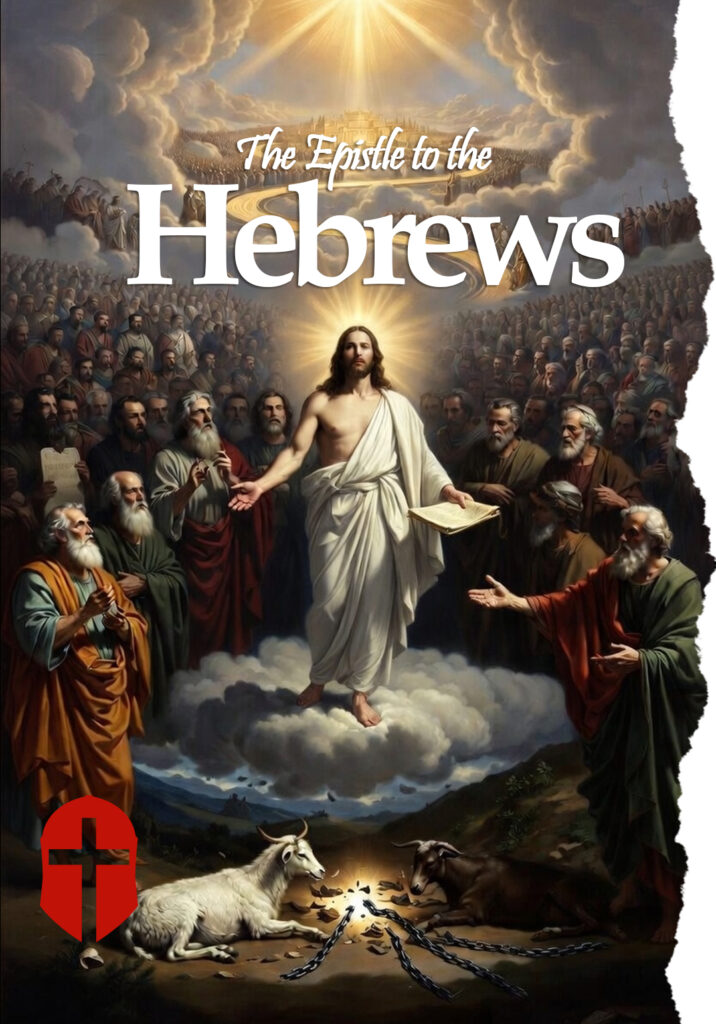
The Epistle to the Hebrews, likely written in the mid-60s AD to Jewish Christians facing persecution and temptation to revert to Judaism, presents a powerful, sustained argument for the absolute supremacy and finality of Jesus Christ and the new covenant He inaugurated. The book opens by declaring Christ as God’s ultimate revelation superior to angels, prophets, and Moses, whose divine sonship, eternal priesthood after the order of Melchizedek, and once-for-all sacrifice fulfill and surpass every aspect of the old covenant system (chapters 1–7).
Through detailed comparisons, it demonstrates that the Levitical priesthood, tabernacle rituals, and repeated animal sacrifices were mere shadows and copies, powerless to perfect the conscience or provide lasting forgiveness, while Christ’s single, self-offered sacrifice purges sins completely, secures eternal redemption, and grants believers direct access to God’s presence (chapters 8–10).
The author, Paul, repeatedly warns against neglecting so great a salvation, hardening the heart through unbelief, or falling away after receiving the truth, using Israel’s wilderness rebellion as a sobering example and urging perseverance, mutual encouragement, and bold approach to the throne of grace through the sympathetic High Priest who was tempted yet sinless (chapters 2–4, 6, 10).
Chapter 11 celebrates faith as the assurance of things hoped for and evidence of things unseen, cataloging Old Testament heroes who trusted God’s promises despite not receiving their full realization, looking forward to a heavenly city and better resurrection.
The epistle concludes with practical exhortations to endure suffering as loving discipline that proves sonship, pursue holiness and peace, identify with Christ’s reproach outside the camp, offer continual sacrifices of praise and good works, and live in light of the unshakable kingdom, closing with warnings against strange doctrines, calls to brotherly love and hospitality, and a benediction of God’s equipping grace (chapters 12–13).